
Blog

Seeing the Invisible: How Optical Gas Imaging Uses Infrared to Detect Gas Leaks
In the oil and gas industry, safety and environmental responsibility are top priorities. But how do we detect gas leaks that are invisible to the naked eye? That’s where Optical Gas Imaging (OGI) cameras come into play! These high-tech cameras use infrared (IR) radiation to pinpoint leaks in pipelines, storage tanks, and processing facilities—helping operators prevent accidents, reduce emissions, and maintain regulatory compliance.
So, how does it actually work? It all comes down to how infrared light interacts with matter — through absorption, reflection, and transmission. Let’s break it down. Click the learn more button to find out.
Learn More

Elevating LDAR: A New Aerial Perspective on Methane Detection
Aerial Optical Gas Imaging (OGI) is transforming Leak Detection and Repair (LDAR) programs by offering fast, visual methane detection across large or remote sites. With proven infrared technology and federal approval, it enhances safety, compliance, and efficiency—providing real-time insight, reducing downtime, and empowering smarter, faster responses to emissions and operational risks.
Learn More
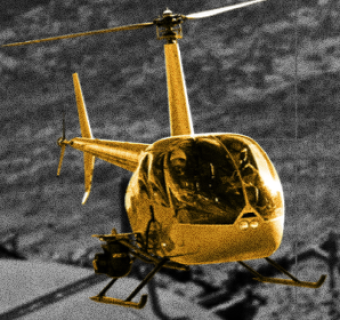
How to Choose the Right Alternative Technology for Methane Monitoring
With the introduction of OOOOb and OOOOc, the Environmental Protection Agency (EPA) has established a streamlined process for approving new technologies without undergoing a full rulemaking procedure. Over the last couple of weeks, the EPA approved a handful of alternative technologies, including ChampionX’s Aerial Optical Gas Imaging (AOGI) platform. This marks a significant step forward in enabling the adoption of innovative methane detection methods in place of AVO methods, OGI and Method 21.
Learn More

ChampionX’s Event Detection AI Model | Defend Your Assets from Super Emitters and OLRE
The U.S. Environmental Protection Agency (EPA) recently approved the first third-party surveyor for the Super Emitter Program, signaling the official launch of this initiative.
With the Super Emitter program in motion, it is essential for the operators to understand the program, how it interacts with Subpart W regulations, and why it's important to deploy advanced technology. Read our blog to learn more.
Learn More

DO 4 WRONGS MAKE A RIGHT?: Understanding the implications of anemometer selection for Continuous Monitoring
2024 was the warmest year on record. In fact, the 10 warmest years of NOAA’s 175-year record have all taken place within the last decade (NOAA, 2024). As we feel the consequences of a warming world (changes in global weather patterns, increases in forest fires, more frequent floods and natural disasters), both private companies and governments are taking action to reduce the world’s greenhouse gas emissions.
Because methane has a greenhouse gas potential that is 28 times that of carbon dioxide, curbing methane emissions is critically important. As a result, many companies—especially in the oil and gas industry—have turned to continuous monitoring systems as alert and quantification mechanisms for effectively detecting fugitive or unplanned methane emissions.
Learn More

Advancements in MOS Sensor Technology, The Soofie® Way
Learn More

Emissions Monitoring and Speed to Detection
Would You Rather Have Monthly Firetruck Inspections or a Fire Alarm System in Your Home?
Learn More

Optimize Emissions Management: The Science behind SOOFIE Quantity and Placement
Learn More

To MOS, or not to MOS, that is the question
Recent discussions of Continuous Emission Monitoring Systems have presented some differences in measurements between Metal Oxide Sensors (MOS) and Laser Absorption Spectroscopy (LAS).
Learn More
Advanced Leak and Repair Monitoring (ALARM) Announcement
Operators in the Permian and San Juan Basins can now utilize ChampionX's services to fulfill the state's regulatory requirements regarding methane emissions. They can also earn additional credits for methane reductions achieved through ChampionX's technology.
Learn More
Super Emitters: What are they and why are they important?
Did you know that a small number of sources are responsible for a significant percentage of methane emissions? They're called "Super Emitters". These emissions impact our environment and air quality.
Learn More
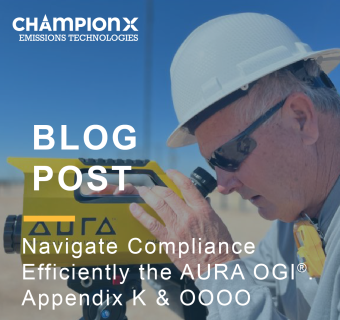
Navigate Compliance More Efficiently with the AURA OGI™ camera: Appendix K & OOOO
We're committed to simplifying compliance efforts, and AURA OGI™ is your trusted tool for navigating the complexities of the Environmental Protection Agency’s (EPA) 40CFR Part 60 – Appendix K and the new 0000 regulations (OOOOb and OOOOc).
Learn More

Our Solutions
Explore the solutions and services ChampionX offers.

Resource Library
Filter through our latest product literature to find case histories, product brochures, news, and more.